El ecosistema digital está presenciando la transición más significativa en la recuperación de información desde la comercialización de internet. El paradigma de búsqueda tradicional está siendo reemplazado por un modelo generativo que se centra en conceptos semánticos y respuestas fundamentadas.
A finales de 2026, las investigaciones sugieren que el volumen tradicional de los motores de búsqueda disminuirá aproximadamente en 25% a medida que los usuarios confían cada vez más en agentes conversacionales como ChatGPT, Gemini y Perplexity para obtener información directa. Este cambio estructural—"El Gran Desacoplamiento"—significa que la búsqueda de información se está separando de hacer clic para acceder a una fuente.
Definición de Entidad Clave
En el contexto de la Economía del Razonamiento, su sitio web ya no es una colección de páginas; es un nodo en un Gráfico de Conocimiento. Los rastreadores de IA son los "sensores" que convierten la realidad de su marca en coordenadas matemáticas.
I. La taxonomía de los rastreadores de IA modernos: Entrenamiento frente a Recuperación
El ecosistema moderno de rastreadores se divide en dos grupos funcionales principales: bots de entrenamiento y bots de búsqueda y recuperación. Para optimizar de manera efectiva, debe comprender qué agente está visitando su sitio y qué pretende hacer con sus datos.
🤖 Tipos y estrategia de rastreadores de IA
1. Los archivistas: Rastreadores de entrenamiento
Los bots de entrenamiento, como GPTBot de OpenAI y ClaudeBot de Anthropic, están diseñados para la recopilación masiva y de archivo de datos con el fin de construir el "conocimiento paramétrico" de los modelos fundamentales. Consumen un ancho de banda elevado y rara vez devuelven tráfico a la fuente. ClaudeBot tiene una relación de rastreo a referencia cercana a 24,000:1.
2. Los exploradores: Rastreadores de búsqueda y RAG
Los bots de búsqueda como OAI-SearchBot y PerplexityBot funcionan como agentes de recuperación en tiempo real. Obtienen contenido en vivo para fundamentar el "conocimiento contextual" durante interacciones específicas del usuario. Estos son los agentes que deseas en tu sitio, ya que generan citas y visibilidad en la "Cuota de Modelo".
| User-Agent | Objetivo operacional | Persistencia | Estrategia |
|---|---|---|---|
| GPTBot | Entrenamiento de modelos base | Permanente | Límite de velocidad para el ancho de banda |
| OAI-SearchBot | Búsqueda de ChatGPT en tiempo real | Temporal | Permitir siempre para GEO |
| Usuario de ChatGPT | Navegación activada por el usuario | Solo de sesión | Permitir para referencias |
| PerplexityBot | Recuperación del motor de respuestas | Alta frecuencia | Crítico para citas |
Si no estás seguro de si tu infraestructura está bloqueando a estos agentes esenciales, utiliza nuestro Validador de robots.txt para asegurar que tus puertas digitales estén abiertas al futuro del descubrimiento.
II. La Base Matemática: Cómo los LLMs "Ven" Tu Texto
Para entender cómo una IA "lee", debemos ir más allá de la metáfora de la lectura y adentrarnos en la realidad de la vectorización matemática. Cuando un rastreador obtiene una página, no procesa las palabras como símbolos lingüísticos; las convierte en valores numéricos dentro de un espacio de alta dimensionalidad.
Vectorización y Embeddings
El proceso comienza con un modelo de embedding. Esta red neuronal especializada transforma un fragmento de texto en un "vector", una cadena de números (a menudo de 768 o 1536 dimensiones) que representan la coordenada semántica de dicho contenido. El principio fundamental es que los conceptos semánticamente similares tendrán vectores geométricamente cercanos entre sí.
Similitud de Coseno: La Puntuación de Relevancia
La métrica principal utilizada por los LLM para determinar si el contenido de su sitio web es relevante para la consulta de un usuario es Similitud del Coseno. Si los vectores apuntan en la misma dirección, la similitud es 1 (una coincidencia perfecta). Si su contenido está oculto bajo jerga de marketing vaga, su vector se aleja de la intención del usuario, lo que resulta en cero citaciones.
Para garantizar que su contenido tenga el peso fáctico necesario para alcanzar puntuaciones de similitud altas, utilice el contador de palabras gratuito para auditar la densidad de su contenido.
III. El Pipeline RAG: Las 6 Etapas de Ingestión de IA
Cuando un usuario hace una pregunta a ChatGPT o Perplexity, el sistema no solo busca; ejecuta un sofisticado Generación Aumentada por Recuperación (RAG) pipeline. Comprender estas etapas es fundamental:
Análisis de la Intención de Consulta
La IA clasifica la instrucción del usuario (factual, procedimental, comparativa).
Indexación Basada en Embeddings
El motor convierte la consulta en un vector de concepto semántico.
Recuperación Multi-Método
El sistema realiza una búsqueda híbrida (palabra clave + recuperación densa neuronal).
Clasificación Multi-Capa (L1–L3)
Un reordenador de tres niveles puntúa los documentos candidatos. Por debajo del umbral de ~0.7 = descartado.
Ensamblaje de Prompts Estructurados
Ensambla extractos, metadatos y marcadores de citación antes de generar.
Síntesis Restringida de LLM
El LLM genera la respuesta, vinculada a los documentos citados.
Si su sitio no está "preparado para la recuperación", será filtrado en la etapa 4. Nuestro guía completa de GEO ofrece un análisis profundo sobre cómo sobrevivir a esta prueba de fuego de citación.
IV. La Trampa de JavaScript: Por Qué los Bots de IA Ven Sitios Web "En Blanco"
⚠️ La Barrera de Renderizado
Uno de los errores más catastróficos en el SEO internacional moderno depende del renderizado del lado del cliente. Los rastreadores de IA suelen ser "perezosos" o tener recursos limitados; leen principalmente el HTML estático devuelto por el servidor.
El Problema:
Si su sitio web utiliza un complemento de traducción heredado que intercambia palabras mediante JavaScript después de que la página se carga, el bot de IA, que a menudo no ejecuta scripts, solo ve el contenido original en inglés o una estructura vacía. Esto hace que sus versiones traducidas sean invisibles para su citación en sus respectivos mercados.
La Solución:
Su sitio debe utilizar Renderizado del Lado del Servidor (SSR) o Entrega en Red de Borde. Esta es la ventaja principal del MultiLipi modelo de optimización paralelo: pre-renderizamos su contenido traducido en el Edge, asegurando que cada agente de IA reciba HTML instantáneo y rastreable en 120+ idiomas.
Errores de redirección por Accept-Language
Muchos sitios implementan redirecciones "útiles" basadas en el encabezado Accept-Language del usuario. Sin embargo, los rastreadores de IA suelen enviar un encabezado predeterminado "en-US" o ninguno en absoluto. Si su sitio redirige automáticamente estas solicitudes a su página de inicio en inglés, esencialmente "bloquea" el acceso del rastreador a sus subdirectorios localizados.
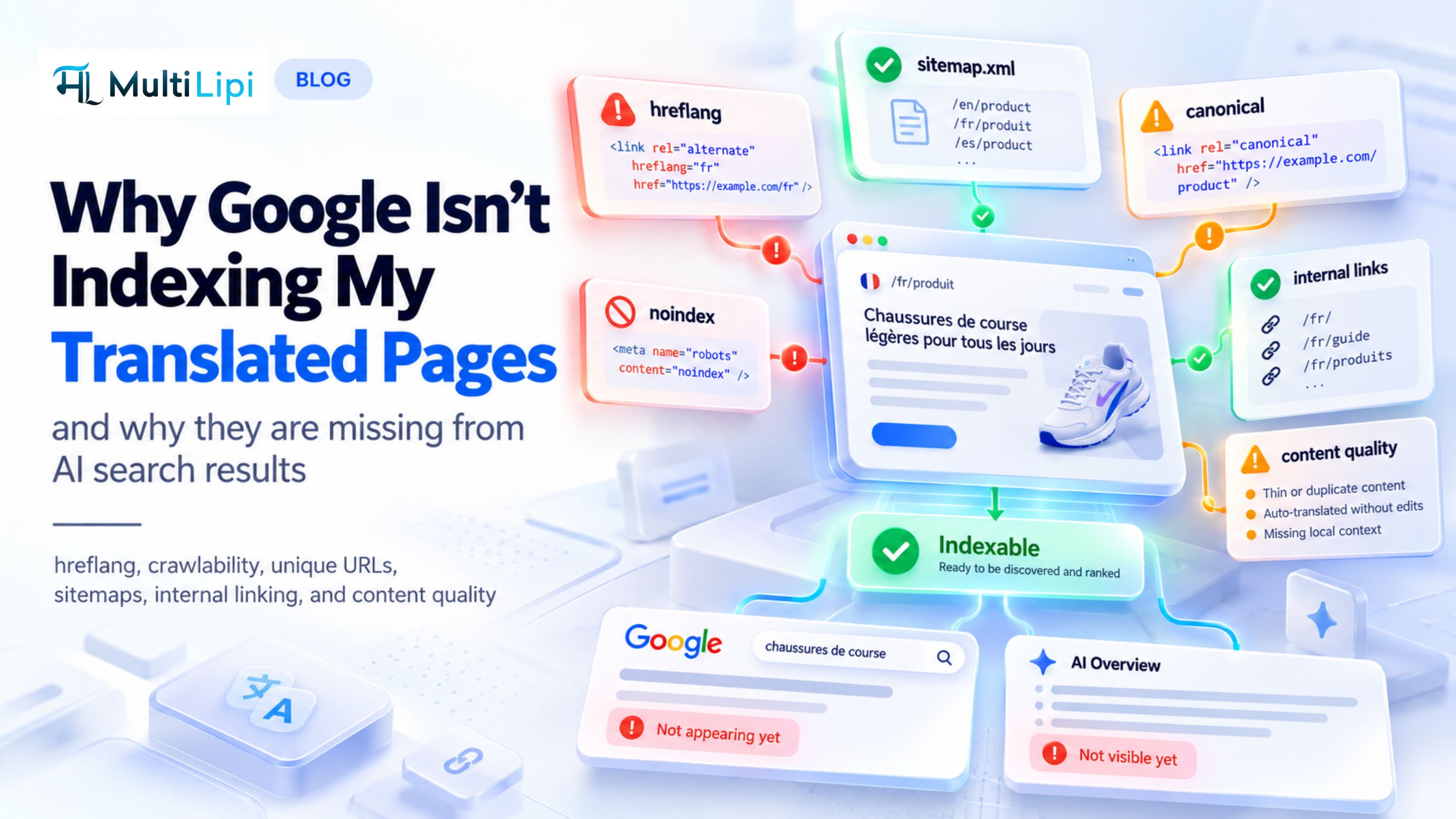
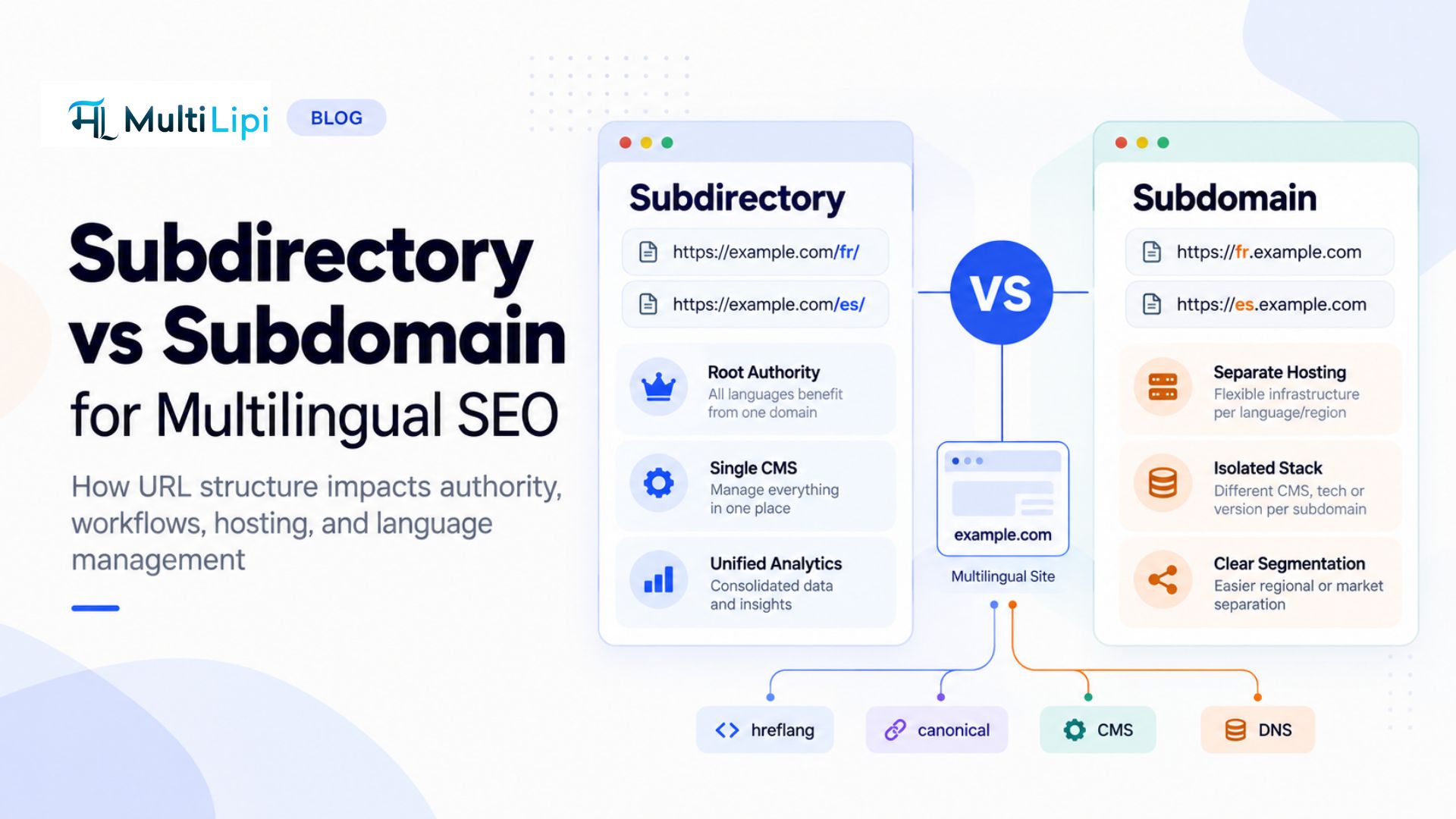
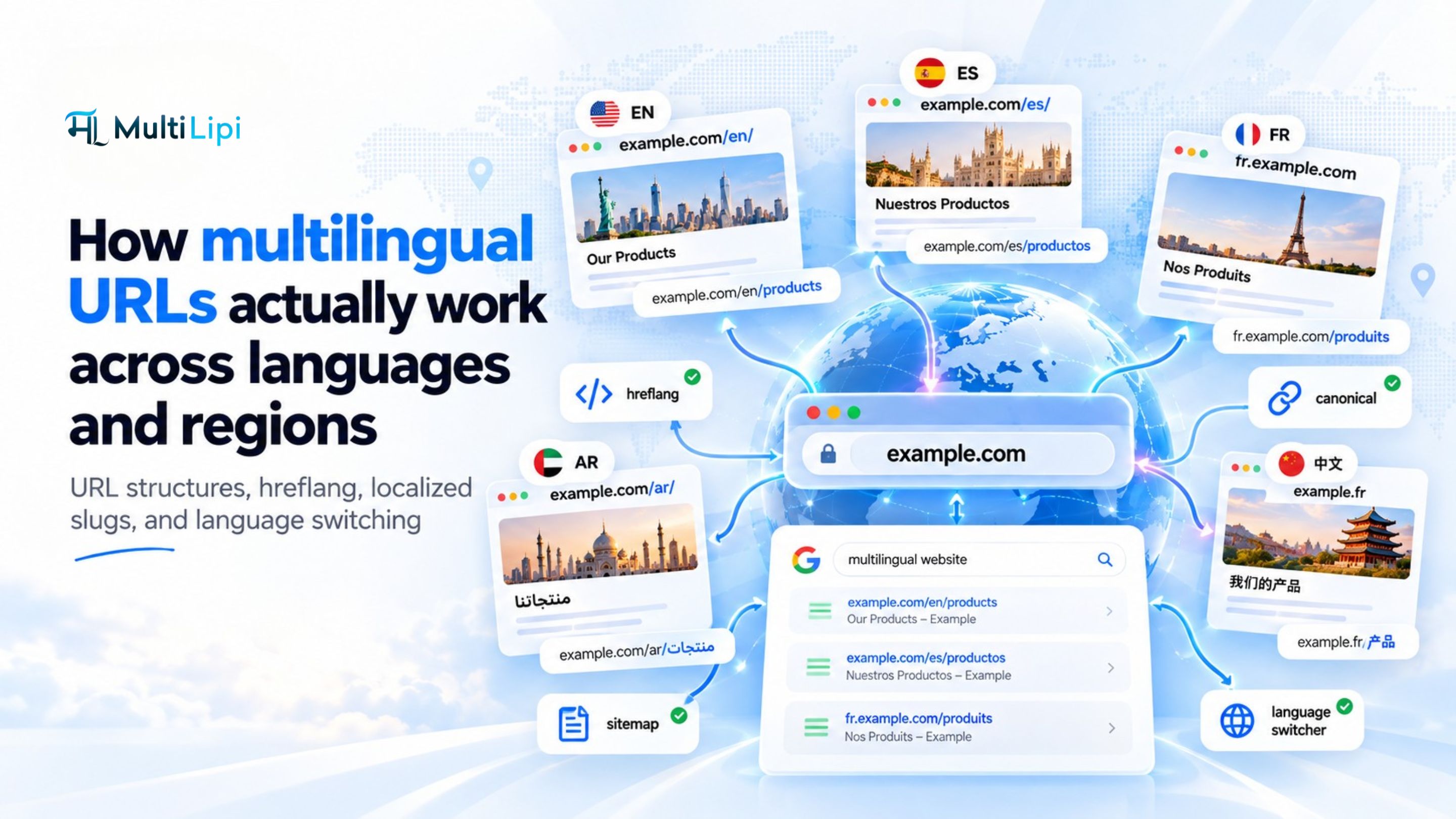
Asegúrese de que cada idioma exista en una URL única y rastreable (por ejemplo, /fr/ o /es/) y verifique sus señales con nuestro verificador hreflang.
V. Estructuración de contenido para el descubrimiento: Los patrones AED y BLUF
Los motores de IA no "leen" sus publicaciones de blog de formato largo; "extraen" fragmentos. Para ser legible por una máquina, debe adoptar el patrón Answer-Evidence-Depth (AED) pattern.
1. La regla BLUF (Bottom Line Up Front - Lo esencial primero)
La investigación muestra que 44.2% de las citas provienen del primer 30% del contenido. Debe comenzar con una respuesta directa de entre 40 y 60 palabras que refleje la consulta conversacional del usuario.
2. Estadísticas y citas de expertos
El estudio de Princeton demostró que:
- Añadir Estadísticas aumenta la visibilidad de la IA en 30.6%
- Añadir Citas de Expertos impulsa las tasas de citación en 40.9%
Las máquinas están "hambrientas de datos". Priorizan fuentes que proporcionan puntos de datos verificables y "de alta entropía" por encima de afirmaciones de campaña vagas. Utilice nuestra guía completa de AEO para reestructurar sus páginas para la extracción.
VI. Ingesta Multilingüe y el Espacio Vectorial Universal
En 2026, la búsqueda por IA es multilingüe por defecto. Los sistemas de nivel experto utilizan incrustaciones interlingüísticas (Cross-Lingual Embeddings) para crear un "Espacio Vectorial Universal". Esto significa que una consulta en español puede recuperar un documento en alemán si el significado semántico es idéntico.
Sin embargo, la "Brecha de Invisibilidad" se amplía cuando las marcas tratan la traducción como un simple intercambio de palabras. La traducción literal pierde las Señales de Entidad—el contexto local y la terminología específicos— que los modelos de IA utilizan para verificar la autoridad en una región específica.
El motor de contexto global MultiLipi está diseñado para cerrar esta brecha. No se limita a traducir palabras; localiza la intención semántica, asegurando que su "Entity ID" permanezca consistente en árabe, japonés y francés. Esto le permite escalar la autoridad de su marca sin perder la "Ganancia de Información" que activa las citas de IA.
VII. Maximalismo de Schema: El Pasaporte de la Entidad
La era del schema minimalista ha terminado. Para la visibilidad en IA, adoptamos Maximalismo de Esquema. Esto implica el uso de JSON-LD anidado (el enfoque @graph) para proporcionar un "pasaporte" legible por máquina para su marca.
Las propiedades críticas para 2026 incluyen:
knowsLanguage
Declarar explícitamente las capacidades multilingües de su organización.
sameAs
Vincular su sitio a nodos autorizados como Wikidata, Wikipedia y perfiles sociales oficiales.
FAQPage
Proporcionar bloques claros de preguntas y respuestas que los sistemas RAG puedan "extraer" textualmente.
Al implementar MultiLipi Optimización de LLM, estas estructuras de datos complejas se inyectan y localizan automáticamente, dando a los modelos de inteligencia artificial la confianza para citarle como la "Fuente de la Verdad" en cada mercado.
VIII. Medición de la "Cuota de Modelo" (SoM)
En la era sin clics, las métricas tradicionales como la "Posición Media" y los "Clics Totales" están perdiendo su poder predictivo. Si un usuario recibe una respuesta sintetizada que recomienda su producto, usted ha ganado, incluso si nunca visita su sitio.
Frecuencia de Citación
Con qué frecuencia los 5 principales LLMs (GPT-4, Claude, Gemini, Perplexity, SearchGPT) citan su dominio.
Tasa de Inclusión
El porcentaje de consultas relevantes en las que se menciona explícitamente su marca.
Precisión del Sentimiento
¿Describe la IA su marca con precisión o está alucinando sus características?
Los equipos con visión de futuro están utilizando MultiLipi's global context engine para supervisar estas métricas en más de 120 idiomas. Lea nuestro estudios de caso para ver cómo marcas como Hotel Continentale aumentaron las reservas directas en un 60% al centrarse en la "Cuota de Citación" en lugar del "Ranking de Palabras Clave".
IX. Hoja de Ruta Estratégica para 2026
Para proteger su infraestructura de descubrimiento digital frente a la caída del 25% en el tráfico de búsqueda tradicional, siga esta hoja de ruta de 5 pasos:
Auditoría técnica
Asegúrese de que los rastreadores de IA no estén bloqueados por su WAF o robots.txt. Confirme que su sitio se renderiza en el servidor.
🛠️ Usa el validador Robots.txtDesambiguación de Entidades
Implemente esquemas maximalistas. Defina explícitamente su marca, productos y expertos como entidades distintas en el grafo de conocimiento global.
🛠️ Utilice la optimización para LLMImplemente una arquitectura de "Respuesta Primero"
Reestructure sus páginas de alto valor utilizando los patrones BLUF y AED. Reemplace las introducciones redundantes con "Bloques de Citación" densos en datos.
Escalado multilingüe
Deje de usar plugins de traducción básicos. Utilice una plataforma que preserve la intención semántica y la "Ganancia de Información" en todos los mercados.
🛠️ Explore los precios de MultiLipiDomine la capa de corroboración
Los modelos de IA valoran lo que otros dicen de usted. El 85% de las menciones de marca en las respuestas de IA provienen de dominios externos y de terceros, como Reddit, sitios de noticias y listados de la industria.
Conclusión: No sea un fantasma indexado
La disminución en el volumen de búsqueda tradicional no es una sentencia de muerte para su marca; es una reubicación de oportunidades. Estar "indexado" ya no es el objetivo; ser sintetizado sí lo es.
Al comprender la mecánica técnica de los rastreadores de IA y rediseñar su contenido para el canal RAG, puede transformar la amenaza de la pérdida de tráfico en una oportunidad de visibilidad global sin precedentes. A medida que la búsqueda se transforma en razonamiento, asegúrese de que sea su marca en la que piensan las máquinas.
¿Está listo para recuperar su visibilidad en la IA?
Deje de tratar la búsqueda por IA como un misterio. Trátela como una infraestructura. Comience su viaje con MultiLipi hoy.
Preguntas Frecuentes (FAQ)
¿Por qué mi sitio se posiciona en Google pero no aparece en ChatGPT?
Esta es la "Brecha de invisibilidad". ChatGPT y Google utilizan diferentes señales. Mientras que Google sigue valorando enormemente los enlaces entrantes, ChatGPT prioriza el "Ajuste Contenido-Respuesta", la densidad factual y la extractibilidad estructural.
¿Pueden los modelos de IA leer contenido detrás de un inicio de sesión o un muro de pago?
Generalmente, no. Los bots de entrenamiento y búsqueda respetan los muros de autenticación. Si deseas que tus opiniones de expertos sean citadas, debes proporcionar un resumen público accesible para el rastreo o un bloque "TL;DR".
¿Sigue importando el recuento de palabras para la lectura de la IA?
Calidad sobre volumen. Los modelos de IA tienen ventanas de contexto limitadas. Es 10 veces más probable que se cite un artículo de 500 palabras repleto de estadísticas originales y citas de expertos que una guía de 3000 palabras con texto genérico.
¿Con qué frecuencia debo actualizar mi contenido para la GEO?
Los motores de IA tienen un fuerte sesgo de actualidad. Para Perplexity, el contenido actualizado en los últimos 30 días recibe tasas de citación significativamente mejores. Recomendamos un ciclo de "Actualización estadística" de 30 días para tus páginas principales.
¿Cómo ayuda MultiLipi con la capacidad de rastreo de la IA?
Proporcionamos la "Infraestructura de descubrimiento". Gestionamos el renderizado del lado del servidor (SSR) y la entrega en el borde (Edge) para que los bots puedan leerte, inyectamos JSON-LD localizado para que los bots puedan entenderte y utilizamos traducción consciente del contexto para que proporciones "Ganancia de información" en más de 120 idiomas.